A swap-out is not a new rental and it is not junk removal, you load the container yourself, and when it is full our team exchanges it for an empty one of the identical size so the project keeps moving. Step 1: you fill…
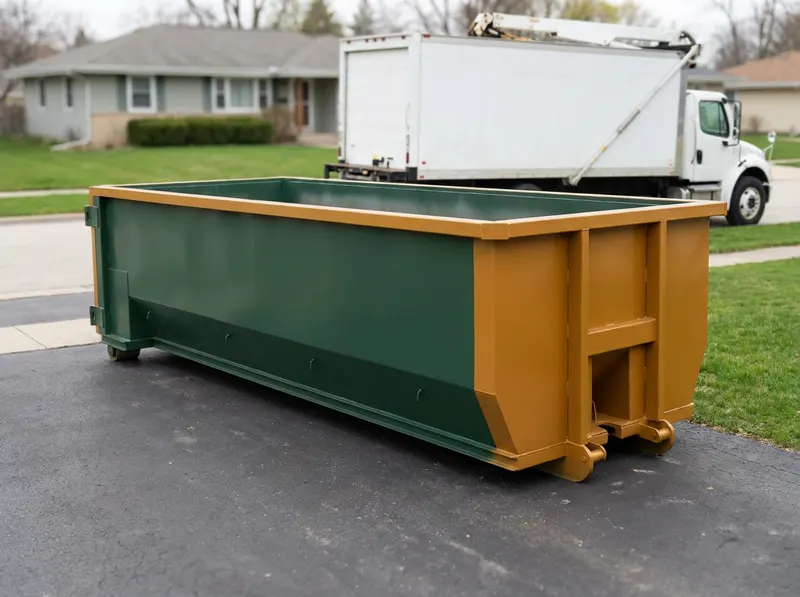
A swap-out is not a new rental and it is not junk removal, you load the container yourself, and when it is full our team exchanges it for an empty one of the identical size so the project keeps moving. Step 1: you fill the dumpster to the load line. Step 2: you call (414) 414-7391 and name your size. Step 3: a driver hauls the full unit to a licensed transfer station. Step 4: the same driver drops an empty container in the same spot. Step 5: you keep loading. Each swap carries its own flat charge at the sizes above, because every full container is weighed and tipped as its own load under standard solid-waste handling practice, and construction and demolition debris is tracked separately from household trash per EPA C&D guidance.
Swaps make sense when a job out-produces a single container. A full roof tear-off in Washington Heights or a two-story gut in Brewers Hill routinely overflows a 30-yard before the dumpster term ends; swapping an identical 30-yard keeps the driveway footprint the same while doubling the debris you can clear. A kitchen-and-bath remodel in Bay View, by contrast, usually fits one 15-yard, so a swap only adds cost, there, a single rental is the better fit. The trade-off is simple: a swap buys more volume at the same curb space, but each swap is a second full container fee, so order one only when the first is genuinely packed. If you are unsure whether you will fill it, loading tightly and keeping heavy material like tile and plaster low and spread avoids the extra haul altogether, overloaded containers that ride above the fill line cannot legally travel under FMCSA load rules.
Placement in dense Milwaukee neighborhoods drives how the swap goes. Narrow driveways in Riverwest, Lincoln Village, and Harambee leave little room, so the replacement container lands in the exact outline of the one hauled, on boards to protect asphalt. When a container must sit on the street in Walker's Point or Sherman Park, the City of Milwaukee requires an occupancy permit, and that permit must stay valid for the swapped-in unit too, the Milwaukee Department of Public Works handles those under its right-of-way program. Material rules do not change between the full and empty container: appliances with refrigerant must be handled as household hazardous waste, electronics fall under Wisconsin's E-Cycle program, and recoverable metal, cardboard, and clean wood can be diverted through resources listed on Earth911. Jobsite loading around an active crew should follow OSHA construction standards so the walk to the container stays clear.
Flat pricing means the number quoted for your size is the number charged, whether the swap serves a Jackson Park estate cleanout or an Enderis Park garage demolition. There is no surprise tonnage settlement after the fact; the haul, the disposal fee at the transfer station, and the empty drop are all inside the per-size figure. Weights that approach the limits defined by the ANSI-referenced container ratings are the only thing that can cap a load, and our team flags that on the phone before a swap is sent. For a quick read on which size to keep swapping, a photo texted to (414) 414-7391 lets us confirm the fit.
Every job gets a firm, written price after an on-site visit.
Tell us about your dumpster swap-out service job in Milwaukee and we'll send a clear, written quote, usually the same day.
 Lumberjack Dumpster Rental